
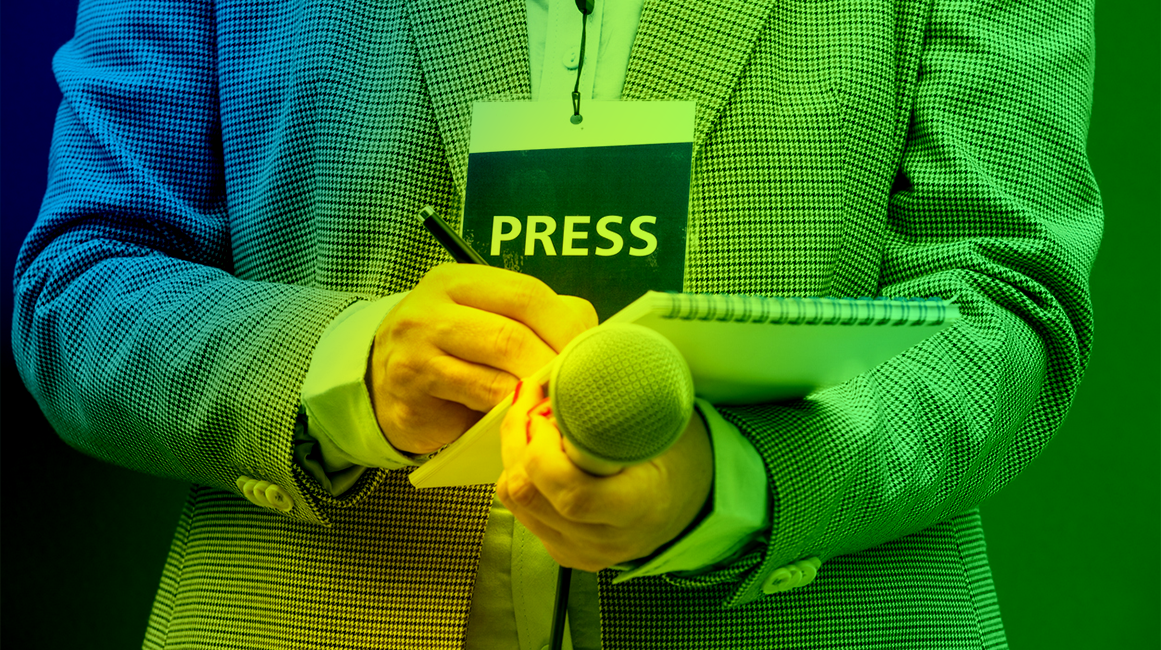
Why AI Makes Media Relations More Important than Ever
The days of Fleet Street’s finest congregating in smoke-filled pubs for boozy lunches are long gone. Nowadays, the newsrooms of national newspapers and broadcasters are scattered like confetti across the capital and beyond. At the same time, the shift towards working from home, combined with intense commercial pressures, means fewer journalists than ever are regularly in the newsroom.
This shift, combined with the rapid ascendancy of generative AI, means it would be easy to assume the age of drinks with journalists is over, or at the very least shifted to Zoom or Teams. Writing this on the 17:00 departure from Euston after a day of meetings with journalists, I can confirm that it is not.
Getting out and meeting journalists is a central part of our approach as a PR agency and something the whole WPR team is encouraged to do. Journalists tell us this is something they really value but that few agencies take the time to do.
But why is it such a focus for us? Why do journalists value it so much? And why does AI make meeting journalists more important than ever?
Here are three reasons why great media relations begins with great PR-journalist relationships:
1. Understanding WHat Journalists Need
Gold standard media relations without the underpinning of strong stories would be a nonsense. But it isn’t necessarily the case that strong stories come before media relations. Nor is it always true that experienced PRs should automatically know what a strong story is for a particular publication or reporter. That’s why great working relationships with journalists are so valuable in developing stories that land.
What particular journalists want and are interested in can be quite nuanced, and often that can’t be reverse engineered by looking at their current output. Indeed, the biggest opportunities are often around the pieces they’ve not yet written. Understanding their areas of interest and the direction of their future output can be invaluable in translating a working relationship into quality coverage that supports a brand’s strategic business objectives.
Of course, beyond this, there are practical considerations. Despite PR typically being thought of as knowledge work, a granular and logistical understanding of how stories reach publication is vital. While there are clearly similarities between publications, we can add an extra layer of value for our clients by having a detailed knowledge of how different outlets work. How does a particular journalist like to be contacted? What are their working hours? Do they prefer written comments or a short phone interview? What pressures and constraints are they working within? This is the sort of information that is much easier to obtain in person than on the phone, on a video call or by email.
2. Staying Front-of-Mind
Could much of this be achieved on a video call? Perhaps. But the reality is that while routine meetings can work well on video, relationship building is much more effective in person. We all know the sense that we’ve only had a partial glimpse of who a person is when we’ve met them on a call. As my colleague Alex Dixon recently explored in relation to the benefits of delivering training in person, humans value human connection and there are real advantages to taking certain conversations offline.
And, of course, a face-to-face meeting is much more impactful and likely to leave a more lasting impression than a video call or a phone call.
3. Trust is the Name of the Game
Building trusted relationships with journalists has always been a key pillar of media relations. There is credibility that you are who you say you are when you’re willing to speak face-to-face.
Now this is becoming more important than ever. This year has seen several instances of national newspapers being duped by commentary from fake experts, submitting commentary generated using AI. And this issue is not confined to AI. A fake case study subject, someone claiming to be a parent of children at a fee-paying school, was even interviewed by a reporter from one national paper.
Journalists need to trust the PRs they work with to deliver truthful and authentic stories. If they have never met us, they may treat our content with an added degree of scepticism.
So, as my train speeds through the English countryside, I can safely say that the era of in-person media relations is far from over.
The author: Pete Bowers is a senior PR and content manager and Chartered PR Practitioner who specialises in B2B PR and particularly enjoys translating complex technical subjects into engaging content.
Want to
know more?

WPR is an award-winning PR agency, based in Birmingham, delivering world-class PR and social media which makes ambitious brands impossible to ignore.
We specialise in consumer PR, across sectors including food and drink, retail and leisure; B2B PR, where we work with companies spanning manufacturing, construction and HVAC industries; and social media.
To start a conversation about how we can get the world talking about your business, please get in touch – we’d love to chat.