
Government U-turns and the Cost of Contradictory Communication
Anyone working in PR or communications will recognise the pattern. Announce your position, walk it back, clarify the clarification, insist nothing has changed, then move on and hope the noise dies down (spoiler: it doesn’t).
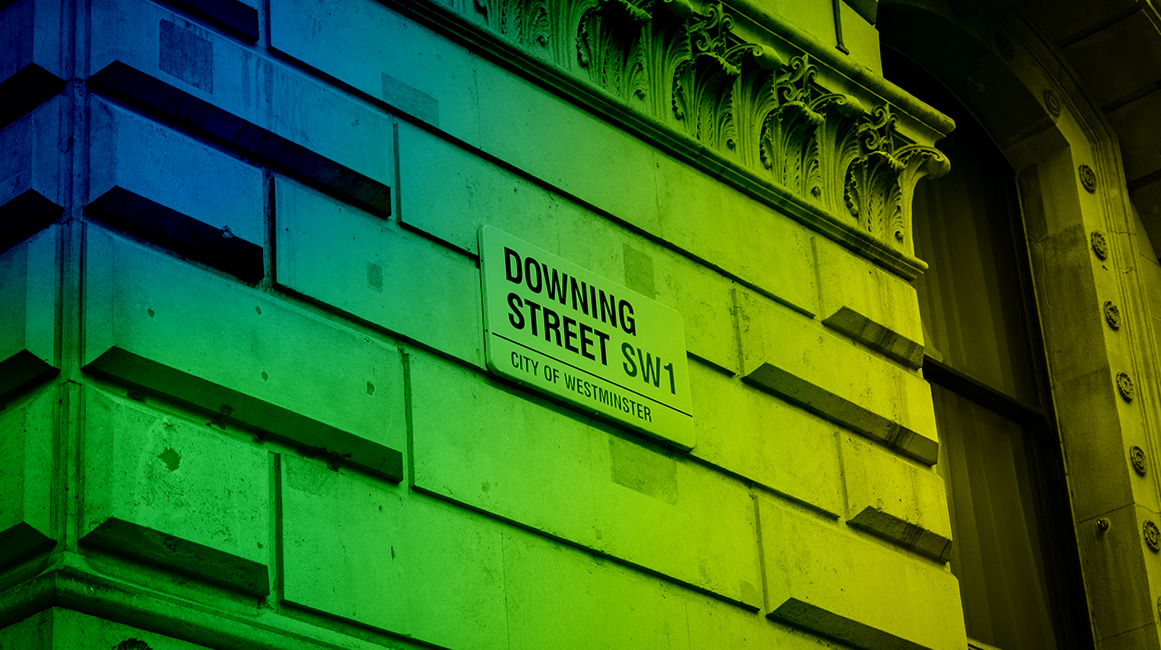
That has increasingly been the shape of government communication in recent weeks. From inheritance tax for farmers and business rates for pubs, to digital ID proposals. Each announcement has been swiftly followed by a chaotic rethink, a U-turn, or a reframe. Taken individually, none of this is unusual. Taken together, it points to a deeper, systemic problem within the heart of Downing Street.
The issue is not the policy; unpopular policies often find their way into law. The problem Starmer must confront is his communication strategy – or lack thereof.
Effective organisations start with a clear sense of what they are trying to achieve and how they want to be understood. They’re clear and decisive. That clarity acts as a filter, helping to shape decisions, language, and tone. It also provides cover when plans change, because audiences can see how adjustments fit within a wider strategic direction. No one runs from change if it is to their benefit.
When that clarity is missing however, messaging – and trust – becomes fragile. Every announcement must stand alone. Every reversal looks like panic. Audiences stop giving the benefit of the doubt, not because they are hostile, but because they are confused.
Consistency is often misunderstood in communications. It does not mean never changing your mind. It means being consistent about your purpose. If people understand the destination, they are more forgiving about the route.
Currently Starmer’s destination is unclear. The train is in motion with no stop in mind. Messages stress responsibility, restraint, and realism, but without a unifying story about what those things are in service of. As a result, even sensible decisions struggle to land. They are heard as warnings rather than plans.
Margaret Thatcher’s oft-quoted line, “You turn if you want to. The lady’s not for turning,” is often framed as stubbornness. In communications terms, it was about conviction. Whether you agreed with her or not, you knew where she stood, which made her consistency legible.
By contrast, Tony Blair emphasised pragmatism, encapsulated in his line, “What matters is what works.” The point is not that changing course is wrong, but that adaptation needs to be grounded in evidence and explained clearly. The contrast is instructive. In the current context, the problem is that messages shift without a pragmatic and clear rationale or narrative, leaving audiences uncertain about the direction.
The contrast now is not that the government is willing to adapt. It is that adaptation appears to be happening in the absence of an agreed narrative. U-turns are not being explained as course correction. They are being read as uncertainty.
This matters because trust is cumulative. Organisations earn it over time by saying what they mean and meaning what they say. Once audiences start to doubt the coherence of your messaging, every future statement is scrutinised more harshly; even good news is treated with scepticism.
For communicators, the lesson is familiar. Strategy comes before announcements; narrative comes before noise. Without a clear through-line, volume and frequency only amplify confusion.
You can change direction. You can soften positions. You can respond to pressure. But if you cannot articulate why, and how it fits into a bigger picture, people will assume there is no plan at all.
In communications, as in leadership, clarity buys time. Confusion costs credibility.
The author: Joseph Price-Moore is PR director at WPR. He’s a communications professional, with a global outlook and a passion for navigating complex narratives across sectors, audiences, and borders, who brings clarity, creativity, and confidence to the table.
Want to
know more?

WPR is an award-winning PR agency, based in Birmingham, delivering world-class PR and social media which makes ambitious brands impossible to ignore.
We specialise in consumer PR, across sectors including food and drink, retail and leisure; B2B PR, where we work with companies spanning manufacturing, construction and HVAC industries; and social media.
To start a conversation about how we can get the world talking about your business, please get in touch – we’d love to chat.